
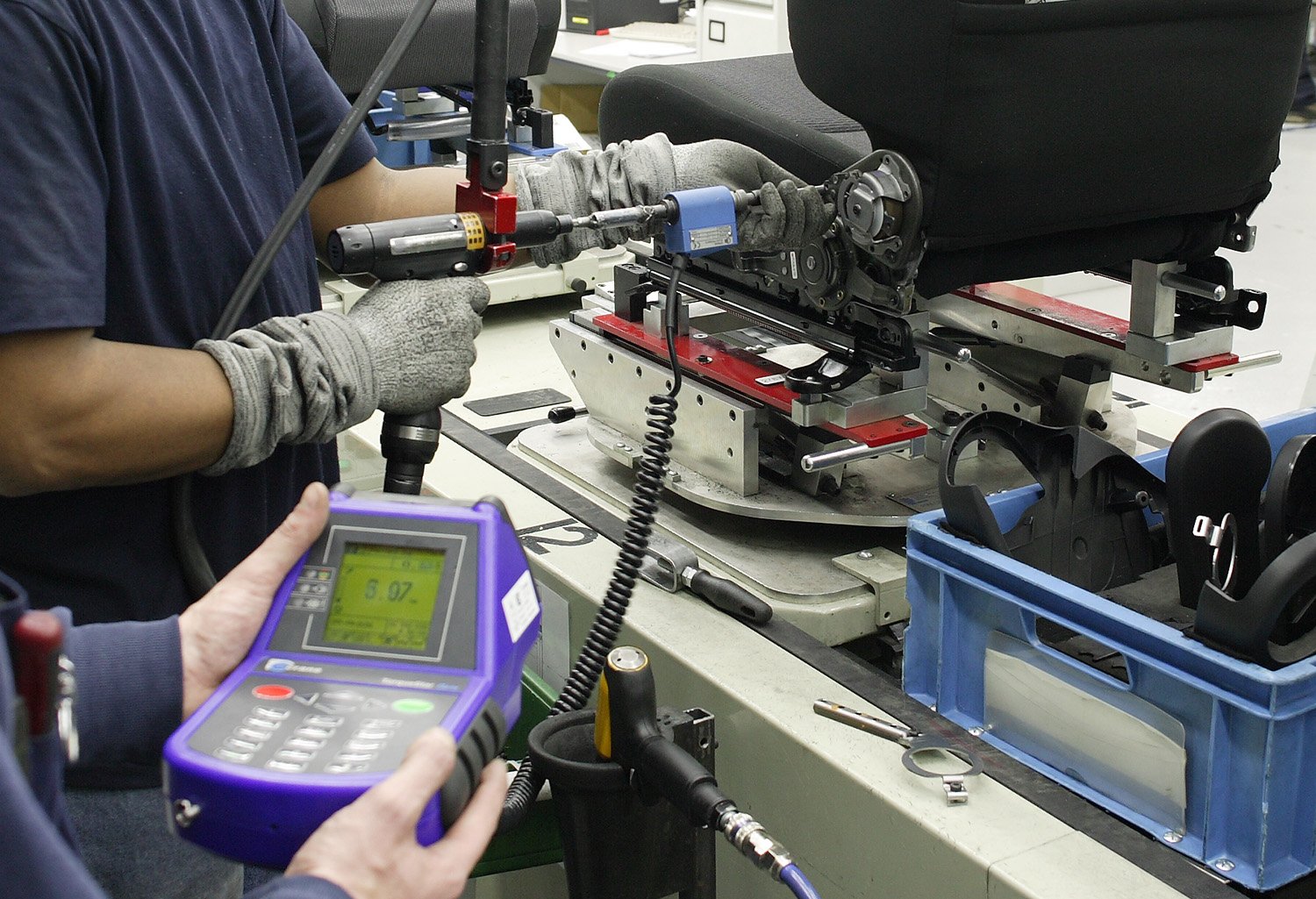
The measurement of applied torque plays a critical role in modern manufacturing, assembly and testing processes. From critical fasteners in the aerospace industry to the assembly tools used along automotive production lines, manufacturers need to ensure accurate and consistent torque application to guarantee their product quality and safety.
While torque tools apply force, torque transducers measure it and help verify it. These specialist transducers help manufacturers to monitor fastening performance, validate tooling and record and maintain traceable torque data across critical applications.
A torque transducer converts mechanical torque (the rotational force applied to the shaft) into an electrical signal. A torque data collector or analyser then translates this into a digital, readable torque value, allowing engineers and operators to monitor, record and analyse performance accurately.
Torque transducers are widely used in quality-control processes, production environments and tool calibration applications. They help manufacturers confirm that fasteners and components meet exact torque specifications, reducing the risk of under-tightening or over-tightening.
There are two main types of torque transducers:
- Rotary torque transducers measure the torque of a component that’s in rotation as part of the system for live, dynamic measurement. For example, they can be used between the assembly tool and the fastener being tightened.
- Static torque transducers are used to measure torque without rotation, with the stress or strain applied directly to them. They are often used for testing and auditing applications.
Both rotary and static transducers can be built as custom systems for specialist industrial environments. Many modern systems also include integrated speed and angle measurement capabilities. This helps manufacturers capture data from the entire fastening procedure.
How does a torque transducer work?
Torque transducers work by detecting tiny levels of mechanical strain induced by torque. Even though the movement is microscopic, highly sensitive internal components can measure it accurately.
Inside the transducer, strain gauges respond to the distortion caused by the rotational force. As the material flexes slightly under load, the electrical resistance within the strain gauges changes.
The transducer converts these resistance changes into electrical signals using a Wheatstone bridge circuit. The signal is amplified and processed into readable torque data that operators can monitor.
Rotary torque transducers operate in-line with rotating tools, motors or assemblies. They continuously measure torque during operation, making them useful for production-line auditing and tool-performance verification.
At Crane, our CheckStar Multi rotary torque transducers are designed for dynamic torque measurement in demanding industrial environments. These transducers can help capture the actual live torque applied as well as the angular rotation of the fastener, all under production and assembly conditions.
Some rotary systems use slip-ring technology, while others use non-contacting designs with bearing or coupling configurations. Non-contacting clamp-on transducers are useful for large-scale applications where in-line installation is impractical.
Types of torque transducers
Different torque measurement applications may require different transducer configurations, which is why there are different types of torque transducers. Choosing the right type depends on the environment, the tooling and the required level of measurement accuracy.
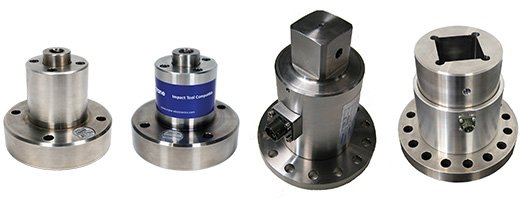
Static torque transducers
Static torque transducers are used to measure reaction torque in stationary applications. They’re widely used for calibration, testing and verification tasks where the torque source doesn’t rotate continuously. They’re also suitable for auditing pulse tools and impact tools during maintenance and testing procedures.
Crane Electronics offers a wide range of static torque transducers in several configurations, including square-to-square, flange-to-square and flange-to-flange. The standard range measures torque from up to 5,000 Nm, with impact-tool-compatible versions also available. For higher-capacity needs, our industrial range extends torque measurement capability up to 75 kNm.
Rotary torque transducers
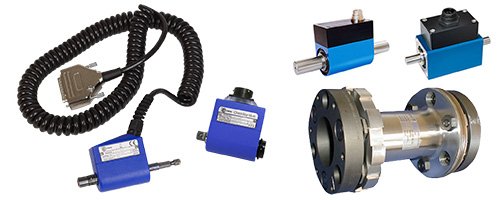
Rotary torque transducers measure dynamic torque while tools or machines are rotating. They are placed directly into the system, allowing manufacturers to monitor torque in real-time, during use.
These transducers and sensors are widely used across assembly and manufacturing applications within a number of industries where high quality products are critical for safety and compliance reasons. For example, in the aerospace, automotive, marine and power-generation industries.
Crane provides a complete range of rotary torque transducer configurations, from square and hex drive transducers measuring up to 5000 Nm, to slip-ring, non-contacting bearing, coupling and clamp-on systems that can measure torques up to 20 kNm and more. This flexibility allows manufacturers to match a transducer to their operational requirements.
Custom torque transducers
Some industries require specialised torque measurement solutions. In these cases, custom-designed transducers can provide unique mounting arrangements, torque capacities or integrated measurement capabilities.
Bespoke transducers are built for heavy-industrial environments, offshore operations and specialist engineering applications. These custom builds can exceed the torque capacities of our standard ranges, with capabilities extending up to 1.4 MNm for demanding applications.
Why is accurate torque measurement important?
Accurate torque measurement is vital across all applications. It can help manufacturers maintain product quality, improve safety and reduce operational risk. Without reliable torque verification, fastening processes can become inconsistent and difficult to control.
It can help operators prevent under- or over-tightening. Under-tightened fasteners can loosen during operation, while over-tightened components may suffer from stress damage or premature failure. Both issues can lead to serious safety concerns, downtime and costly warranty claims.
Torque precision is crucial in aerospace and automotive manufacturing. Accurate torque measurement directly affects passenger safety and equipment reliability. It also plays a major role in applications operating under extreme conditions, such as rail infrastructure and marine.
In construction, heavy industry and power generation, it helps engineers confirm that critical components are secured to the correct specification to ensure safety and reliability. It also helps to reduce the risk of mechanical failure in harsh environments.
Torque transducers can also support compliance and traceability requirements. Many manufacturers need to record accurate torque data to meet audit requirements, quality standards, and process validation procedures. This recorded data allows manufacturers to trace back to the exact torque applied at the point of assembly, helping to identify the source of a potential fault quickly or providing a documented record if a product issue or recall needed to be investigated
Process industries such as pharmaceutical and food manufacturing also rely on torque verification. Accurate testing and auditing of cap and closure torque levels help maintain product integrity and packaging consistency.
Choosing the right torque transducer
When it comes to selecting the right torque transducer, you’ll need to consider several operational factors. Torque range, accuracy requirements and environmental conditions all influence which solution delivers the best performance.
Manufacturers should also consider:
- Static or rotary measurement requirements
- Environmental operating conditions
- Speed and angle measurement needs
Working with an experienced torque measurement specialist can help manufacturers identify the most suitable solution for their application while ensuring long-term measurement reliability and performance.
For more information about our range of rotary, static and custom torque transducers, get in touch with one of our team.